Transcript
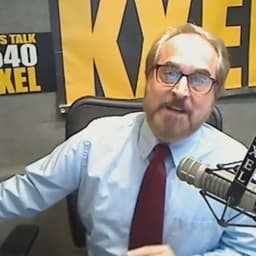
KXEL Live & Local with Jeff Stein · Mon Nov 9, 2026
News Talk 1540, KXEL, where Iowa comes to talk.
Hello, I'm Jeff Stein.
Today we're going to talk not only about a wonderful organization, alive and running Iowa, but also about an event coming up on Sunday the 15th.
It's a documentary and live conversation.
And this has to do with suicide.
mental health, and in particular young people, but folks of all ages, and I'm joined by one of the co-founders of Alive and Running Iowa.
He's Troy Belmer.
Mr. Belmer, thanks so much for taking the time.
Yeah, thank you, Jeff.
It's an honor to be asked to be on the show, and I appreciate you coming out some time for us.
Now, I gave a very short description of what Alive and Running Iowa is.
We encourage folks to go to aliveandrunningiowa.com for more information, but fill in the gaps.
What is the organization?
What need does it fill?
And how did you decide to become involved?
We started the organization in 2010 myself, my wife, and our partners in this organization, Ryan and Melissa Nesbitt.
And it was started with the whole premise of preventing suicide.
and being there for people that have lost and made a suicide.
So Ryan and I each lost a classmate when we were sophomores in high school and fast forward several years later and we decided that we wanted to do something.
So we started the organization that's completely volunteer led and we're just here for supporting the community education to not only prevent suicide but again also unfortunately we don't save everybody so we have brief support available as well.
These are shall we say complicated times and I know when I was in high school there was someone who took that method of resolving difficulties Because they saw no other way It's been around for a long time.
Is it worse now?
I guess it's the crux of the question
You know, I think that's difficult to answer statistics would say that it is but
I also look at it from the aspect that we've come a long way with mental health where now you'll read an obituary that will say suicide and for years it didn't.
So I think it's hard to say because some of it's reporting.
It's just it's being reported that way whereas previously it wasn't.
Now we do know that I think because of all the awareness around mental health we seem to be on the rise as far as people that struggle or are we on the rise of people that are willing to admit it.
That's always one of the difficult things and it seems to me that the stressors and I'm going to focus on younger people and and that may be inappropriate But as I look ahead to what you're doing with this weekend program, it seems you're trying to reach these young people Again, we expect so much and they grow up so much faster because they have devices in their hands and they're all these forces that frankly parents
may just not be aware of.
In other words, it's pretty easy or flippant to say, well, parents should just look after their kids.
That's hard to do these days.
Absolutely.
I commonly tell people I'm thankful that I grew up in the era that I did because kids have it certainly tougher than we did.
They cannot really escape the spotlight or even just everyone knowing what they're doing, whether it's
life 360 or social media it's constantly videoing them or tracking them and it doesn't give them a chance to work through life themselves and experience life I guess the way that I did growing up there's a lot of pressure because of social media to uphold a certain standard if you will I believe that so many people don't realize that when you're looking at social media it's a highlight real
It's not what that person is living every single day, but adults are guilty of this too, of looking at social media and being envious or jealous of what someone else has or someone else is working towards them.
With the youth, their brain isn't fully developed until they're 25, so it's even more difficult for them to grasp, and it is adults that what they're seeing online isn't what's happening every single day in that person's life.
Well, I've often said social media is anything but social.
It's a nasty place quite often, uh, anonymous comments, et cetera, that you would never say to someone face to face.
But because you're reading it, you know, sometimes you read it two and three and 10 times and it has undue influence on someone's mind, uh, alive and running.
Where did that name come from?
Well, when we sat around the
table the Nesbitt's Rover at our house for dinner one night when this whole idea started to come together and Ryan and I have always been pretty serious about taking care of our physical fitness and Alive obviously comes from making a choice to not take your life and Running Ryan's a little more passionate about his running.
I run every week He just runs a lot more than I do and so we both have a love for running though, so
That's where the name came from was, you know, choosing to be alive and choosing not to take your life.
And we believe that taking care of yourself physically can definitely impact your mental health as well.
And it certainly makes sense because, again, there's the impression of running, of moving forward, of striding into whatever is next.
We're speaking with Troy Belmer.
Mr. Belmer is one of the co-founders of Alive and Running Iowa, online alive and runningiowa.com.
They raise awareness on the issue of suicide prevention and note, your story isn't over yet.
On Sunday, November 15th, at the Diamond Event Center in Cedar Falls,
Free community screening of a documentary entitled My Ascension.
Tell me about the documentary and the event that's coming up.
So we first became in contact with Emma Benoit.
That's the gal that the movie was filmed about.
Back in 2022, we brought her up here to the Gallagher Blue Dorn in October of that year and Alive and Running invested the money to buy rights to show the film.
and then to bring her along is obviously an added expense but well worth it.
So the film is 90 minutes long and it goes through her life from the day that she decided she didn't want to be here anymore to pretty much present day.
And it's geared at kids because that's the age she was, she was a teenager when she attempted to take her life.
But there's so many adults that take stuff from it because there's a lot of conversation in there about The balance between kids and their parents parents and their kids and having grace for each other and So afterwards after we show the film for 90 minutes she'll come on stage and we'll do a live Q&A and She always refers to that as the meat and potatoes of the event You know, that's when people get to ask the question that they want to know they get to dig a little bit deeper with her and
she handles herself with such grace and she's become very educated about mental health since her suicide attempt and we walk away from those Q&As and people are just filled with hope after seeing the film and talking with her and you know getting ideas of how they can work through stuff whether it's their own stuff they're working through or they're trying to work through things as a family it's just
Provides a lot of hope in the community when we have her around so we have been bringing her up here Every year sometimes a multiple times a year since 2022.
It's just been a blessing to work with her
She attempted suicide blessedly.
She was not successful and I'm just wondering without giving away the the point of the documentary but I have to think that in her mind when the outcome was different than she had intended
I guess you could take that multiple different ways, but one way is to say you're here for a reason.
In other words, when you survive the suicide attempt, I imagine that might bring some different form of clarity to an individual.
That's actually addressed in the film between her and one of her therapist because her therapist also at a young age tried to take her life.
And when she was not successful, she was very mad because she felt like even more of a failure as in, I'm such a failure.
I can't even end my life.
Emma, on the other hand, was very grateful that she survived, even though she resides in a wheelchair today, but she was still alive.
So there is a balance sometimes when a suicide attempt is unsuccessful because sometimes they're dropped some farther.
because they feel like, geez, I can't even do this to myself.
And then other times they're just extremely grateful and, hey, I've got a second chance at life.
And it's interesting because, again, that can go either way, depending on the situation and the individual.
Again, we're speaking with Troy Belmer.
Mr. Belmer is one of the co-founders of Alive and Running Iowa.
Aliveandrunningiowa.com, raising awareness for suicide prevention.
And we're previewing this 90-minute documentary entitled My Ascension.
back in the cedar valley on sunday november fifteenth diamond event center in cedar falls screening starts at three thirty and then the subject of the film emma will be there for a question and answer session admission is free you don't need to register there is uh an event set up on the facebook if you'd like to follow along on that but again you can go to alive and running iowa dot com for more information this is geared
intentionally toward younger people because of what her situation was.
And I'm told that it's not just that she's coming to town and will be there at this.
You're doing some additional community involvement, especially with schools.
So yeah, she will have a full week.
She will kick off Sunday with the community event in Cedar Falls.
And then we have a full week of schools.
So Monday she'll be at Columbus here in Waterloo.
And I understand that Columbus is bringing some students over from the
Waterloo Youth City Council to view it with them.
So that's kind of cool to see that partnership Tuesday, she'll travel north up to North Bay at Valley and they are bringing in South Wind students as well.
So kind of a cheaper one on that deal Wednesday, she'll be at Hampton Dumas Thursday will be BCL UW and Then she'll wrap up her week down in Ogden at Ogden High School down there.
So we're really looking forward to her to impacting hundreds of students and
those events are always the feedback we get from the schools afterwards is amazing.
It is a trite cliche, but I will use it anyway.
Hundreds of students will be exposed to this message.
If it reaches even one, all of this is well worth it, isn't it?
Absolutely, absolutely.
When we look at an event we don't ever look at, you know, how many can we touch?
We just want to touch one.
So once again, if you go to AliveAndRunningIowa.com, you'll get all the information about the organization and this event, but I'll repeat for you the 90-minute documentary, My Ascension.
It's on Sunday the 15th, Diamond Event Center Cedar Falls, screening at 3.30 Q&A with the subject of the documentary, Emma, following.
And again, it is free and open to everyone.
Troy Belmer, thank you so much for all of the work that you are doing in this, you and your colleagues with Alive and Running.
And thanks for taking the time here.
We hope lots of folks avail themselves of the opportunity to learn this message.
Yeah, thank you so much.
We appreciate you, you know, carbon time on the air to bring awareness to a topic like this.
Alive and Running, Iowa.com is the website.
This is where Iowa comes to talk.
News Talk 1540, KXEL.
And as KXELive and Local continues, time now to welcome a return guest.
She's Nicole Crane, President Iowa Association of Business and Industry.
They are online at IowaABI.org.
Nicole, thanks so much for taking the time.
Thanks for having me again, Jeff.
Always great to have a conversation with you.
We have talked with you and your predecessor at least four times a year because that's how often the quarterly
Outlook survey is released, but before we get into the numbers for the fourth quarter, remind folks, please, Iowa ABI, who are you folks and what do you do?
Yeah, so ABI, the Association of Business and Industry was founded in 1903 as the Manufacturers Association, and we really serve as the voice for business.
We make sure that we can advocate for Iowa businesses up at the state capitol, and we also bring businesses together to learn from one another from having events and traveling all over the state.
and you have had some meetings recently where you got to talk to folks in person, but we'll get to that as part of Iowa Manufacturing Month in a moment, but each quarter, you survey members on a variety of topics.
What are the headlines from the fourth quarter outlook survey?
Yeah, Jeff, as you know, we always survey in the previous quarter looking at the quarter ahead.
So the headlines for the fourth quarter, 47,
percent expect sales to expand, and 63% once again expect to make capital expenditures in the next quarter.
And you know what?
We've heard this time and time again, 74% identify workforce and talent as the top business challenge, followed by healthcare costs at 58%.
So this is not much different than when we talked three months ago going into the third quarter or the fall quarter, but as I look at this, 47% of the people you surveyed said sales will expand, 53% said they would remain the same.
Well, you put that together, there's nobody talking about contraction, and that's a great thing.
I mean, stability or an increase?
Boy, that's pretty good when we hear about how tough the economy is for folks.
Absolutely, that's a bit of a surprise.
I think when we, like you said, when we're we're hearing on the headlines and reading some things, but yeah, love it when the math works that everything right now seems to be stable.
But you know, and then as we talked in the past in the capital expenditures of that 63%.
20% plan to make modest investments.
That isn't just adding a new computer.
That's upgrading some systems.
That's maybe putting an addition on your building.
But that means those companies are committed to staying in Iowa.
They're not only investing in their people, they're investing in the equipment and operations that they have in this state.
When you get nearly two thirds of a survey saying they're going to spend money on their business, if they were really worried, they'd be sitting on cash.
They may be cautious in these expenditures, but again,
When you start putting money into the building, the operations, et cetera, that's a good sign for the local community because that means that business is planning to stick around.
Absolutely, which we always love to see.
And that's something we're going to talk about the manufacturing month and all of our activities, but it's very clear how important businesses are to especially the lifeblood of rural communities and seeing them continue to invest in their business and invest in their community means that they're committed to where they're at.
It has been the case for, I don't know how many surveys now, but the number one issue that employers have is workforce and that means not only growing
but retaining, and we're also talking about a quality of workforce.
I see health care costs creeping up as well.
You've got nearly three quarters of the respondents saying workforce and talent is the top challenge.
But health care costs more than a majority say that's an issue as well.
That's a tough tandem to balance when you're an employer trying to attract and keep workers.
You've got to have a good benefit package harder to do these days.
Absolutely.
And I think we have been
hearing about that quite a bit as well and you know it's not unusual I think that we see this in this fourth quarter survey because many of our members they are doing their health insurance renewals at this time several companies have January 1 renewals many individuals do as well and so I think that is really on employers minds it's probably on all of our minds as consumers of health insurance but I think those are things that you know at ABI we're looking at and what is the legislature going to do about the rising cost of health care
Or also, what can they make sure they don't do that would cause some increases in health care?
And that's something we've been advocating on for a long time because ever since the federal health bill, anything that's passed at the state level from a mandate perspective, that goes right to our employers and increases their health insurance costs, which employers take seriously.
providing a robust package to their employees and to their team members.
But all of that goes into the cost of doing business and it makes it harder when we see those cost double-digit increases that we've been hearing about this renewal season.
And again, you surveyed folks in September at the end of the third quarter.
It is looking prospectively into the fourth quarter and we're well into that now.
But I have a feeling that the next survey
you're going to have certainty.
In other words, as you and I are talking, it's election week and at the time these folks responded, well, you don't know what's going to go on in Washington.
You don't know what's going to go on in Des Moines or across the state.
And so the picture for some people may be even clearer when you survey them next month in December prospectively for the first quarter of 27.
I think so too, Jeff.
And we see that every year, every two years, I guess, after an election that that first quarter survey really reflects
Regardless of the outcome, the certainty that manufacturers and other business leaders expect to see, you know, what I think you may see in that first quarter, workforce just continues to be a top business challenge.
And so as we ask our questions to our members and try to understand how we can help them and how the legislature and others can stay out of their way, it'll be interesting to see what
items come up front and center.
I don't know that you'll see healthcare as the high challenge in first quarter just because those renewals will have already hit, but I think you'll continue to see workforce.
Nicole Crane is president of the Iowa Association of Business and Industry.
IowaABI.org is the website.
She joins us on News Talk 1540 KXL.
We've mentioned this already, but October every year is Manufacturing Month and you folks were busy with a whole host of activities and it helps put the spotlight, I trust, on just how important manufacturing is to the economy of the state.
100%.
I don't think a lot of Iowans, and even those, especially those outside of Iowa, realize how important the manufacturing industry is to our state's economy and to our state's community.
Manufacturing contributes over $44 billion.
It's the number one GDP in the state.
It employs more than 200,000 Iowans.
And so we spent the month of October highlighting that.
We got in a wonderful manufactured Winnebago.
Iowa manufactured Winnebago drove all around the state.
really talk to manufacturers, we tour different types of manufacturing facilities from food manufacturing to RFID, metal barcode manufacturers, Winnebago, all across the board.
Also have the opportunity to highlight that in communities and highlight it to students.
We engaged over 250 students talking to them about the careers in manufacturing and bringing in manufacturing leaders from communities to talk about jobs they have available to them when they get into high school.
school and graduate from high school.
I always find it fascinating the wide variety of businesses, manufacturers that we have in this state.
Folks typically think of agriculture and yes, obviously many of the manufacturers are tied to that sector.
But again, some of the things you just mentioned, if you said to the average person, did you know this is made in Iowa?
Did you know this was invented in Iowa?
I dare say many would give you a quizzical look because again, it is such a wide range and that's great when you're trying to diversify your economy.
You don't rise and fall on one sector.
Absolutely.
I think that is what is so fun about the tour.
We're at MyDM and Piazza, the winner of the 2026 coolest thing.
They have an e-power station, a very silent generator, but they do all kinds of other products they manufacture there.
Then we go to
Zips and New Hampton, and we know them for manufacturing tow trucks, but they do a lot of other things.
They're online sales that they have.
You think about New Hampton and the size of that community,
You see the Zip's manufacturing facility, but who knew they had, I mean, I didn't know people in New Hampton probably know, they have multiple other buildings in that community and their footprint, talking about capital expenditures, their physical footprint in that community is just amazing to see.
And then again, we talked about the food manufacturer that we visited and then a hook lift manufacturer, Cargill, food, another, you know, I
could go on and on as
you can tell, but it's really a lot of
fun to share that and to also bring in legislators to help educate them.
This is what's in your backyard.
These are the people that you're representing, not only the business owners, but the employees that work in these jobs and the type of jobs and careers these individuals have.
This was the second year for the
Chris crossed the state RV tour.
This year, you started it with the annual Iowa Manufacturing Conference.
What was the mood of those who attended?
It's one thing to do surveys.
It's another to do one-on-one phone conversations, but having a group of like-minded individuals in the same room for a day, you probably get a sense about optimism or pessimism, and I'm just wondering what you took away from that.
You know, I thought the mood was pretty good at the conference.
You have 388.
manufacturers and business leaders that come together.
And part of that day is celebrating legends of manufacturing and really highlighting the best of the best in the industry.
And so that topped the day.
Obviously we recognize former ambassador and former governor Terry Branstad for all
that
he's done for the manufacturing industries and the policies that he's advocated for and three other great manufacturing legends as well.
You know, one thing that I think all manufacturers are challenged with
but all businesses right now is the pace of change that is coming at everyone.
You know, you think we're an election year as you alluded to earlier, but that wasn't being talked about nonstop at the conference.
We hear it on the TV.
We hear the noise, but in the rooms and in the breakout rooms, people are really sharing with one another.
They're talking about the great things happening in their community, but they are talking about the pace of change and how they keep up with it, how they get ahead of it.
and how they educate their future workforce.
If you'd like more information about manufacturing and elevate Iowa manufacturing, just go to IowaABI.org.
And if you're interested in the survey for the fourth quarter, the information is there as well in the news section of IowaABI.org.
Nicole Crane, president of IowaABI, thanks so much for the conversation.
We'll talk again when the next survey is out, if not before.
Great.
Thank you, Jeff.
Look forward to talking to you again soon.
This is where Iowa comes to talk.
News Talk 1540 KXEL.
News Talk 1540 KXCL where Iowa comes to talk.
You never know how the work that you do might impact someone you're unlikely to ever even meet.
That's one takeaway from a new short documentary film with an Iowa theme.
The Immortal Lincoln, a story of lost struggle and driving until the wheels come off is based on an article by Phoebe Wall Howard, who's also the film's executive producer.
Thanks for being with us this morning, Phoebe.
Thank you so much, Tim.
And the director of this film is John Anter.
Thank you, John, for your time this morning.
Yeah, good morning.
Thanks for having us on.
Phoebe, since you were the one who told this story in its original form, let me have you give us a little bit of the background.
So this is a situation where I discovered this story because I needed a ride to the airport.
I was going from Okaboji over to Sioux Falls, South Dakota, and Doug Burns, a newspaper man in Iowa, offered to take me in his immortal Lincoln.
So it is in this drive that I learned the story of what happened in his life, the idea that his family lost everything, and it was this Lincoln vehicle that really carried him through the hardest times.
of his life.
It was a really challenging circumstance for his family business and I guess we wouldn't necessarily think of a car being something that could change a person's life when they're you know an established professional they're in midlife but this car really did.
Well it's interesting because he said it's the only thing in his life he felt didn't abandon him.
And here it is 400,000 miles later that it still has had no issues and stays by his side.
But the idea we learned in making the film that something like a car, when someone is traumatized, a single inanimate object that you hold onto every day can actually carry you through.
That's something we learned through reporting and in the film.
And I'll clarify, just for any listeners that might have caught the title and might be a little turned around, the Lincoln here is not referring to the president.
It's not referring to the city in Nebraska either.
We're talking about a vehicle, a Lincoln car.
And again, you told this story, Phoebe, in a written article.
John, let me bring you in.
John, enter the director of the film.
Why did you want to work on this project and create a visual version of this story?
Well, I thought the story was amazing.
And then we thought, well, we could probably help some people and just tell the story.
And I said, how an auto worker in some plant can touch somebody's life that they've never even met.
And then I was at the Okuboji Writers Retreat as they're just to help out.
And they didn't have anything for me to do at the time.
So I sat in on some documentary film making sessions.
And after that, I talked to Doug and we decided to make the film.
So the really crucial part of this is when you go and you have the chance to talk with some of the people who actually made this car that was was so life changing, so impactful for Doug.
What was that like to film?
That was great.
With the VIN number, we found, you know, actual workers that built that actual car.
And we went into Chicago Assembly Plant where they were still working.
and interviewed him and Marvin Jones said he was touched to know he was in the thoughts of someone that was going through hard times.
You know, we've got plenty of folks who are in similar roles here in the Cedar Valley who work for John Deere or who work for other big companies.
They have a small job as part of a big assembly line.
They may never even seen the finished product, much less the person who's going to use that product.
Is this for them?
Is this for somebody who's in Doug's situation?
Who's the audience for a short film like this?
Well, when we played it at the Pearson Arts Theater to like 200 people, the people that came up afterwards and said how it touched them in different ways.
Some people that went through similar struggles.
Some people don't give too much way in the film.
There was different parts in the film that like it just touched them.
The target audience for this would be workers who don't realize that everything they do every single day is somehow touching the lives of people who buy the product.
The second audience would be people who've been through struggles.
That's been the most powerful response that shows
the number of people who went up to the director afterward and said seeing a man who had everything talk about losing everything really made people feel like their personal stories were real and they weren't alone.
The other is the director of this film is a union electrician.
The story initially ran in the Detroit Free Press and the Des Moines Register, but this is also about union people and understanding that the strength of your brotherhood goes beyond your factories out into our communities, that this is all about the strength of us together.
Phoebe, again, you're a writer by trade.
Have you ever done anything like this, taking anything you've written or any other type of project, turning it into a film now as the executive producer of this documentary?
No, I was an associate producer on a World War II documentary that was quite powerful.
But this short is, it's 23 minutes long and it is
It's the size of a sitcom.
You know, people say, what's the length of 23 minutes?
Why that length?
And it's really what we're used to watching without commercials.
And I've never done anything like this.
But another thing that is so fascinating is when we've privately screened this to an audience in California.
They told us they never thought of Iowa as a main character, that they hadn't considered that Iowa was so beautiful.
A number of the people in the California audience had never been to Iowa, and they said after the film that it was breathtaking the images of Iowa, and it changed how they viewed the state.
We're hearing from...
Phoebe Wall Howard, who's a writer and the executive producer of a new documentary short film called The Immortal Lincoln, a story of lost struggle and driving until the wheels come off.
Also, the film's director, John Anter,
The film just out making its debut a few months ago and the release of this is something that's happening in small stages, almost screen by screen.
Tell us about that and maybe the necessity of that with this type of film.
Exactly.
So these are what's considered preview screenings, private screenings, because this film will be submitted to film festivals in 2027.
So we're careful.
These are very small private screenings.
The one we're doing in Iowa is through the Iowa Farmers Union in December.
But these are playing in Michigan and Iowa and then going nationwide with the film festivals.
We've submitted and we'll see if we're invited.
Always interested when talking with filmmakers, people working on projects like this about the business side of the industry, because for a lot of us, and this has obviously changed with YouTube, with the accessibility of video, but a lot of us who grew up now decades ago, think about movies, think about film, and we think about theatrical releases, 90 to 120 minutes, big budgets, or at least big advertising for those films.
not really the business that a lot of filmmakers are in.
So there's a tremendous appetite for documentary shorts and short films.
So those are the ones that you're playing, not just on streaming services where people want, a lot of people watch YouTube, but people also go on streaming services and that's what this would be, but also airplanes.
There's a tremendous demand now on airplanes for shorts of all kinds because you might watch five movies instead of one.
Well, John, let me ask you about your perspective on the business and other projects like this.
Do you feel like this has been something, an experience that is encouraging you to continue to look for these kinds of stories?
It's been an incredible experience making this.
And that's what everyone asked me.
What's next?
Are you making another one?
And like this story spoke to me.
And if I find another story that speaks to me and I think is an amazing story that
we can tell with video and put it on the screen.
I'll definitely make another one.
Well, Phoebe, let me give you the chance for the last word and maybe encouraging folks, especially if they're able to get to that showing in December at the Muscogee Convention Center as part of an Iowa Farmers Union event, or maybe further a field in 2027 if they can encounter this film in one form or another.
Give us your last word on investing 23 minutes to watch this story.
Well, the incredible thing on this is we plan to be, we're hoping to be in Des Moines and Cedar Rapids and other cities around Iowa in 2027.
This is 23 minutes.
It's pretty darn riveting.
The other thing is that there's a great Q&A afterward.
So it includes musician Jason Wall Smith and Carol native Heidi Krause, who's in Iowa City.
student, if you can imagine.
That's who edited this, is a University of Iowa student.
So this will be in Iowa, and I think it's unlike any experienced people can imagine.
We were stunned by a standing ovation, and Peter Hedges, who of course wrote What's Eating Gilbert Grape, was in the audience and stood up and said, a triumph.
This film is a triumph.
So we were awed by that, and it's exciting.
Phoebe Wall Howard is the executive producer of The Immortal Lincoln, a story of loss, struggle, and driving until the wheels come off.
Phoebe, thanks for your time this morning.
Thank you.
John Anter directed the film.
Thank you for being with us.
Yeah, thanks very much.
The film is The Immortal Lincoln, and you can see it at an Iowa Farmers Union event that will be held at Muscogee Convention Center on December the 4th, coming up now in just a matter of weeks.
This is the station where Iowa comes to talk, News Talk 1540 KXEL.