Transcript
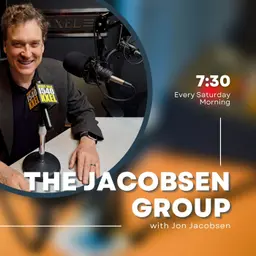
The Jacobsen Group with Jon Jacobsen · Mon Oct 20, 2025
If you're enjoying this KXEL podcast, then we invite you to listen to KXEL's great programming in real time too!
You can hear us on the radio, statewide at AM 1540 and in the Cedar Valley at FM 100.5.
We stream live on the web, not only through KXEL.com, but also through our free KXEL mobile app.
And Alexa knows how to find us too.
It's where Iowa comes to talk, News Talk 1540, KXEL.
Economics is the study of human choice in the world we live.
Faith is confidence in what we hope for and assurance about what we do not see.
By investigating faith in economics, we can learn how they lead to human flourishing.
This is the Faith in Economics podcast, a presentation of the Gortney Institute at Ottawa University.
Hi, and welcome to our show.
I'm Justin Clark.
I'm an ARD family professor of philosophy and ethics.
And I'm joined by Russ McCullough, the Wayne Angel Distinguished Chair of Economics and founder of the Guartney Institute, and Peter Jacobson, the Guartney Professor of Economic Education and Research.
All right.
Well, the internet
seems to be going to higher and higher levels of complexity with AI and other things.
So I want to try to get a fix on some of the issues we face, and I don't know exactly what Peter has in mind, but he's going to lead us through something fabulous.
Peter, what do you have to say?
Yeah, so I'm going to talk about how you're asking, Dumber and Dumber.
No, that is somewhat of the podcast.
We mostly want to talk about, Justin's gonna hate me for saying it this way, but the philosophy of the internet, I don't know.
I know Justin hates tech, I just hate what people just use philosophy to mean, like, I want to talk about something.
It's just how I'm using it in this case.
That's not the reason I hate you.
And so in the past listeners, we've done a podcast on her bit, though it's just kind of like an internet alternative would be maybe a way that you put it or a different way of being on the internet.
And today's not about her, but today's just about the internet in general.
And what I wanted to talk about was why the internet is so terrible now.
And like, this is my most, you know, you know, aggrieved old person take, you know, the back in my day take that I have, which I think I'm actually objectively correct on, which is that when I was growing up,
the internet was like cool and interesting and now the internet is like boring and soul-sucking and it's exceptional to find something really worth your time on the internet today whereas back
in back in my day, a previously, you know, early 2000s, the internet was sort of characterized by finding things that were really interesting and worthwhile.
So here's what I mean.
Let me get specifics down by talking about like my own time on the internet compared to now.
So now the way that I see people use internet is like there's four or five, six megabytes, you know, Google, you've got Reddit, you've got a few news aggregators, you've got social media, so Twitter, Instagram, etc.
And
I say, at least in the US, from what I can say, young people's time is 90% spent on these platforms just scrolling in a straight line.
And so you scroll and you scroll, it's called doom scrolling, right?
It's when you just scroll endlessly and kind of stare at a few things.
You know, some of these websites, like, try to aggregate interesting stuff to you.
Like, that's the idea behind Reddit.
It's like, let's get all the interesting things from all over the internet and put it in one spot.
I don't think that's what Reddit does, but that's what Reddit tries to do, or at least previously tries to do.
And so that's how the internet was, or is now.
It's like, you've got six big streams, and you kind of make your way down the stream.
My perception of the internet when I was younger is the internet was much more interested in offshoots and beat, like, going down the beat path.
or going down back ways.
And what I mean by that is like, when I was on the internet, I was really interested in video games and TV shows.
And I liked the Japanese animated variety of TV shows.
And so I wanted to find a video game that was based off of the show that I really liked as a kid.
And I had the one GameCube game of that, but I wanted more video games like that.
And so I was like, oh, the internet sometimes has this sort of thing.
And so I search and I find this project that is making this game.
And it's making this game using some software released by Valve.
It was Valve's half-life editor, if you want to know the specifics.
In other words, this is like a small engine that Valve used to their games creation company.
They used it to create their game.
And they're like, well, let's let everybody create games with our game engine and use our assets and that sort of thing.
Just release it to the public.
Well then I stumbled onto like 10 different communities making games like this.
And I got really interested in like making maps of games.
Like I downloaded like the map maker and started making my own maps.
And I got interested in like learning.
I was in like the internet forums talking about these games.
And in the internet forums you could make your text different if you learned how to code certain things.
So I'd spend some time like learning HTML and stuff like that.
I built my own forum on one of these like forum creator websites.
And I'm not saying everybody went to this extent back then.
But things like internet forums or blogs or, in other words, there were destinations on the internet that were not part of these big six large streams that the internet are today.
In other words, the internet was a lot more back roads than it was on the beaten path, is what I was trying to say earlier.
And I think that there was even like, for example, a website called Stumblr.
And what you would do is you would, you know, hit the button on Stumblr.
It would take you just literally a random website on the internet, like anywhere.
It could be anywhere that you were going.
And people would discover these cool things and they would go and they'd share them and they'd talk about them.
You know, flash games were very popular.
So if you were a kid growing up when I was a kid, there's addictinggames.com.
People just like make these little video games that you could play for free.
There's no advertisements, anything like that.
No microtransactions.
So my point is just this.
I feel like the internet used to involve a lot of discovery and a lot of kind of forging your own path.
It was almost in a very kind of silly way adventurous to be on the internet when I was growing up.
It was also more dangerous, right?
It could click the wrong thing when you're trying to download a video game.
And it would download a... There were how many
people were predators that were on your
form.
And that could be too, yeah.
But that still happens, I think, on the current... I don't think the current internet's any better on that front.
But point being is...
that there was danger involved with that, but that's also part of adventure in the first place, is danger, right?
And so, like, you don't know if the thing you're following is... And by the way, that game that I was interested in, uh, never released.
The person who was responsible for developing it just stopped talking to everybody else who created the game and, like, that ended it.
So it's like, it wasn't, like, a happy ending, but, like, I made friends on the way.
I still have Facebook friends with this guy from, like, Norway who made this game.
And so, I guess I want to talk about that.
I want to talk about...
the internet as being on the beaten path or off the beaten path and how the internet say it's app culture is what I call it like we've got six apps and we just kind of scroll through them and it kind of seems like that's boring and miserable and it kind of seems like and maybe this is just like my bias but it seemed like when I was a kid the internet was like exciting and interesting so I don't know have you guys noticed the same thing that the internet has become increasingly streamlined and boring am I misdescribing the phenomena but am I describing something real what do you think?
I'll jump in first with the old man perspective because I'm graduating in 1989 from high school.
I've been with the internet since its infancy and I just, is there something more than email and online shopping to the internet?
I don't know where this sense of adventure comes from so that must have came.
My point is that that might have came
out a little after I was already let's say in the business world more worried about emails and you know online shopping or something and maybe website development certainly was one but for more for me anyway commercial purposes so
I don't quite connect in the same way you're stating that, and it might just be our 20-year age difference.
Yeah, well, it's kind of funny because I think you're right that the internet, at least in large part, was sort of forged partly by this commercial side of, like, let's get this shopping thing set up and all that.
But kind of along the way, again, let me give some more examples of this.
A really popular website when I was in junior high high school was a website called My Life is Average.
My life was average would just be a website where you could submit a story about how your life is pretty average and like there were like hundreds of people on this website like saying like oh it's kind of interesting it's like what would now be like a subreddit on Reddit like used to be kind of its own thing and so you know then there are offshoots of that there's like my life is bro which is like a bunch of lacrosse bros talking about how cool their life is right and so like it just seemed at one point
that these little projects that people would make on the internet would kind of like it take on their own life, you know, whether that's games.
And so is there more than, you know, email and in business?
Yeah, there were games on the internet for a long time and they still are, but they're all in an app store now.
So there's not a game communities really.
So there were games, there were programs that were developed by people in the internet and communities around them.
There were
how to decentralize communities.
And so again, like people, if you were interested in like PC gaming, you would go to like the PC gamer magazine forums and talk about PC gaming.
Or like, if you wanted to look up like, you know, how to like get through a certain level on a video game that was difficult, there would be like a website that had game, you know, FAQs, frequently asked questions, right?
But now it's like, that's just all shoved in like YouTube and Reddit.
And like, that's what people do.
So
yeah.
And let me ask one more follow up.
Does
what you're saying some of it sounds like you already said is available just it's kind of crammed or hard to find and so my question is is it you don't stumble into it the way you did or is it be people don't use that or it's not as popular or as venturous because
It's always right in our face with the mindless scrolling.
And so our time's been substituted for that.
I think a lot of it has been subsumed by the big platforms.
And I think the problem is the big platforms tend to take the edge off of all of it.
And so like you still kind of have the same things, but there's things that like are now advertiser friendly versions of them.
So
yeah, I think this definitely happened.
Correct me if I'm wrong.
Are you saying something like.
the internet used to be a source of kind of food for like food for niche interests and now it is kind of just giving everybody the same
Slop.
Yeah.
The internet used to be the alternative to the mainstream media on TV.
Yes.
It used to be the alternative and now what has happened is just the same interests and the same groups that used to you know in 2003 or whatever were giving us the same like
three-channel monoculture have now just taken over what used to be a kind of weirdo depot, for lack of a better word, right?
Yeah, I think that's true.
And I think that that's happened for a couple of reasons.
One of them is the one you brought up, which is like, I remember when I was in college, a big site was like, call it Schumer.
I don't know if you remember.
college humor.
A bunch of sites like that got subsumed by Facebook because Facebook said just let us host your site and then we'll do all the hosting and it'll cost you less on servers and then you'll still make this money via some advertisements or whatever but there was like a bunch of class action lawsuits against Facebook because they misrepresented what they were doing and what happened was a bunch of giant corporations took over
All these old platforms, it used to be their own sites.
Like you talk about these to have, you know, these things are now more likely to be subreddits than sites in and of themselves.
There was like Color Tumor.
There was Overheard in New York and Overheard wherever.
E-bombs world.
Yeah.
And these, these places were all weird and they did have an edge.
And now when you have the same six companies owning all of these sites independent on ad revenue from, you know, milk toast advertisers, the edges, I think, are hard to find or at least they aren't where those of us who think we had an edge 10 years ago, the edges aren't where we put them anymore.
The other thing that I think led to that happening wasn't just the consolidation by like large corporations.
It's that
Have you ever heard the phrase like the eternal September?
No, I haven't.
So it used to be every September, in the early days of the internet, use net forums were big.
So this is before me.
I was a hodge mission.
People got into college, they would get an ID and they would be able for the first time to use the internet on their college's computers.
And every September, admit.
that admins, administrators would have to get ready for this influx of people who had no idea how to behave or where to go on the internet.
And so it was like, okay, September's coming.
We're gonna have to be nice.
We're gonna
talk things down.
We've got newcomers.
We've got to train them how to act, where to go.
You can't snap at people or whatever.
And then with the advent of AOL shipping out the CDs to everybody, it was, oh my God, it's eternal set of member.
It is
newbies all the time everywhere.
So it wasn't, I mean, we can argue about like which one caused the other.
But these two things together, the normification of the user base also is going to lead to this idea that like, oh, well, it's not just full of food for niche appetites anymore.
I agree.
And I want to expand too on that theme of like things being niche because it's not just and I agree with you that like Facebook grabbed a lot of things.
But interestingly, Facebook itself changed too.
And it changed in a way that, in a way, was less niche, but I would say, first off, you're right.
The internet used to be more niche, or at least there used to be more decentralized niche communities.
I would say the internet also used to be a lot more personal.
And what I mean by that is, I still remember when your Facebook page that you had, like your profile, was something that you manipulated the appearance of significantly.
And so you could have like buttons on your Facebook.
It was just like a board with like a button on it.
And you could move that to where, you know, to the top left part of your Facebook.
And when someone went to your Facebook, they would see your buttons that you have set up.
Or, you know.
People used to have, even though like you can still, actually I think they finally removed the feature.
You could poke people on Facebook, right?
Which is just a way to notify someone that they had been poked.
So it was kind of a stupid feature.
But the point is like you could move things around.
When I had AOL, you could do like customize your home screen.
You could change like, oh, you are gonna have news on your home screen or like horoscope.
So I remember that I was like 11 years old reading my daily horoscope on, it wasn't AOL, it was FrontierNet as well.
We added it as InternetSeconds.
And MySpace is the perfect example of this.
Comparing early-day MySpace to current social media, the two things couldn't be more different, even though they're in a way the same thing.
MySpace was a way to connect with people and talk to people.
That's what it existed for.
And the way that you got a blanket MySpace page, but you could actually change the code of your MySpace page.
make it play music every time somebody went to it.
You could put like little flame animations, you know, you could change the whole thing black in the background with white text.
In other words, it got my space out of all the social medias with the most customizable.
Facebook was a little bit less, but still allowed for some customization.
And so the internet was very personal in that sense, like the drive by even the major website says, let's let people make things look how they want them to look.
And it was personal in the sense that my guess, and this is again, just a guess, is the proportion of websites that were hosted by people's personal individual servers back then was much higher than today.
In other words, I wouldn't be surprised if,
you know college humor or you know my life is average if these websites started off as like being hosted in like somebody's garage they've got like a server set up or something like that and nowadays I imagine that's almost uh impossible like I I know you can find it like at times in academics host their own websites now so like that still exists sometimes but for the most part it doesn't happen and so it's less personal in that sense too in other words we've we've outsourced the
the way that websites are sort of created and put on the internet as well out of a personal sense.
Yeah and so yeah I think the eternal September thing and the corporatization element are one but it is interesting even the corporations have changed over time too.
By the way the philosophy is now exactly the opposite.
It's not just we're not going to let you move things around but
We are going to stop you from moving around to the things that you've always been able to move around, right?
This is like Windows, like trying to tell you, like, oh, no, you have to do this update now.
Like, when would you like the next update?
Not would you like the next update?
When would you like the next update?
And forcing you to take this update.
Yeah, except 12
minutes.
Exactly.
Or like, you know, almost every website having the same like five tones of blue icon, right?
Like that's another example of this.
And so the de personalization and homogenization of the internet extends, I think, on several margins.
So.
All right.
Well, this looks like a good spot for a break.
And this is just reminding me of our big, big business being boring and other things with a recent episode.
So I think we got some places to build from there when we get back from break.
We'll be back in just a bit.
Ottawa University has an exciting new major, PPE, which stands for philosophy, politics, and economics.
Each of these three fields is interesting in their own right, but they intersect in ways that are important to understand, both individually and for your community.
If you find philosophy fascinating, but want to make sure that your study of the subject is practical,
If you enjoy economic analysis but want to see how economic laws interact with moral principles, if you are interested in politics but want to explore how economic and ethical realities constrain our political choices, you should consider the PPE program at Ottawa University.
The Gordon Institute at Ottawa University is the best place in the Midwest for free enterprise education and its contribution to human flourishing, faith, and economics in action.
We have some great high school student programs like PPE Fest.
This is an event where students get to listen to some world-renowned speakers
and then participate in competition geared around philosophy, politics, and economics.
Our everyday economics program is just a half day on a Saturday, and we will have an integrated discussion about common sense economics.
We have a college credit microeconomics course that runs every eight weeks.
Your high school student can earn college credit for the special price of $200.
If you know some students interested in programs like these, contact Peter, Justin, or Russ today.
Okay, so we're back and I thought there's gotta be, to me, there's a lot of creativity that does go on within these big business platforms.
And so I'm just wondering if we're glossing over some of the adventure, some of the creativity that's potential with, you know, making your own video, making utilizing the tools and various software platforms to enhance, you know, whether it's YouTube videos that you make or TikTok, writing to blogs.
So
Yes, I think we have these big businesses boring and streamlined and kind of funneling down into a one size bits all economies of scale, make it marketable thing.
But then within that, people with very low entry cost can express themselves.
And so I think that's maybe a
Positive that comes out of maybe some of the big business stuff.
Maybe the entry cost was always fairly low.
Not really.
If you had to, you know, back when it started, you had to have the college basically be enrolled in college to have decent access or it was usually higher income people that had internet access at all.
So in some ways it's ubiquitous everywhere and you can be the lowest income person and still have access to express yourself.
So I don't know if you think I got anything there or is that that just makes it worse.
I think
You are correct that the entry level has fallen, and I think that's exactly the issue.
And I think that gets to Justin's every September comment, but there's lots of it.
Like, if it's the case that it's really cheap for you to express yourself online, then it will be the case that people with lower quality ideas are going to be more willing to express themselves.
Because if it's...
By lower quality idea, I just mean, like, if it's cheap for you to do something, you're gonna do it more frequently, right?
It's gonna be, you're gonna not save it for special occasions.
Classic example of this in Econ is out the third law of demands Armin Alson came up with.
Walter Williams always put it this way, married people go on better dates.
Why do people marry people go on better dates?
Because when they go on a date, they have to hire a babysitter.
So the fixed cost of the going on the date is higher.
And so an expensive date is relatively less, it's relatively less of a big deal than an inexpensive date for someone who doesn't have kids.
And so if you have to pay $50 to a babysitter, going to a $10 movie doesn't make very much sense.
Makes more sense to go to $150 play, right?
As opposed to if you have to pay $0 for a babysitter, the $10 movie makes a lot more sense.
And you can do this
And, you know, basically the relative cost of a higher quality thing is higher or is lower when you have that entry fee.
And I think the same thing is applying here.
I think that, yeah, people can say whatever they want on Facebook and Twitter.
And that's why there's really hard to find good things on Facebook and Twitter.
Like it's easy to express yourself because everybody's in one spot.
And because of that, it's hard to find good things.
Yeah, so I also think like it reminds me of something somebody once said about the Cultural Revolution in China when there were somebody said, yeah, but look, isn't it great that all these kids, they're all carrying books, you know, it's Mao's little red book and there was once was, yeah, but it's all the same book.
Just like, yeah, we might have lowered everybody else might need to express it might now be expressing themselves.
But if they're all expressing the same thing, that's
To me, that's kind of a cost in the trade-off.
I think part of the reason this happened is that the internet, I think, used to be a kind of place where you went to feed those niche interests and to kind of maybe be weird.
There's a sense in which it's very, very hard.
Like, it's easy to be weird in a small town.
You just have to be slightly abnormal, which is
almost everybody is.
It's tougher to be weird on the internet.
There's so many people, and interestingly, I think the internet breeds it more of a kind of conformity.
There's a point in, like, I think it's the office where they go and they look at Dwight when he's playing his video game online.
The persona he's created for himself is
a paper salesman.
Like in his online persona in this game, he's also a paper salesman.
And the difference though is that he can fly, right?
And the joke is like, that's your escapism.
Like in your wild dreams, you're also a paper salesman.
And this reflects like my least favorite site in the world is LinkedIn.
I think it's the worst possible site.
It's this attempt to like drive our business personas
into the cyberspace.
I think one of the things that happened is when the internet went from a place you went to go like, feed your fringe interests to, no, this is actually where I'm conducting my business.
That makes it much riskier for you to do anything fringe whatsoever on the internet.
And now we have the situation arising where kids
who have grown up on the internet and maybe they did weird stuff when they were in high school or made risque videos.
These come back to bite them in their 20s because the dumb stuff that they did, they did on the internet rather than behind a 7-Eleven or something, which is where I did my dumb stuff.
I was behind Vaughn's jumping Kory Donati's car and we weren't like nobody was watching us, but that didn't come back to bite us because
we did it actually out in the real world and when you have a situation where kids are like the internet is forever and it's kind of open in the sense that you can do a lot of stuff but I don't know it seemed to me like it's also enforcing this kind of rigid conformity because nothing goes away.
And you are like your business like the you take your work to the internet with you every day.
And so I really hate that aspect of the internet.
It's why if you look at like my my Twitter says nothing about where I work or any of that stuff.
I like to keep my private life separate.
And
I think that this kind of universal is a like, oh, it's going to be so easy to connect with everybody.
We kind of lose out on this.
One important part, I think, of being a human is being able to set up some guardrails about privacy, about which parts of your life you want interacting with the others.
And I think the internet makes it really easy for people to jump over those guardrails.
Yeah, I think, and actually good evidence of this, is that I think there are some platforms that, even though they are starting to slide into the realm of boring internet,
Like one way to analyze this is to ask like what places have been the most internet and by the most internet I mean like the way the internet used to be despite all of this and like LinkedIn is a great example of a platform that is like the opposite of what the again it's like everybody's post sounds very same even the individual expression is same like LinkedIn is so standardized that even the people on it sound the same.
What's the opposite of that from an, from a large internet perspective?
I think the, there's a few, but I think the biggest platform that people would be aware of that still has some life in it on this angle as YouTube.
So I still think that like really interesting and like new things are created in YouTube to give an example of like the extent to which YouTube like creates interesting things that even hit other platforms.
Are you guys familiar with Scorogami?
No.
No.
Okay.
Scorogami is, you could follow the accounts Twitter, but a lot of people follow it now.
Scorogami is a,
site that keeps track of every unique score in the NFL so it shows every possible NFL score and then it shows the ones that have actually been done and so you have all these interesting combinations of like ones that are still available like there was just actually a score agami this last week because of the 40-40 or whatever tie it was between the two teams because that never happened before and so it has kept track of every NFL score and like people on the internet will kind of follow this.
This stemmed from a YouTube video from a guy who has like a sports YouTube channel and he's a static stats guy and he's like Wouldn't it be interesting to think about like all the possible scores and see how many have happened and like look at this over time and so now like on Twitter and all these places like you have a score gummy and like If you go into the comments of like football scores and I feel fine people like talking about this and so you know YouTube is a good example of this and I think you could even see this like the biggest sign of this on YouTube is it was in 2018
So, interestingly, YouTube doesn't have dislikes anymore, and there's lots of conspiracies as to why that happens, but I think the most... Is
it not?
I didn't have to even... There's no thumbs down?
By the way, another example of this, YouTube used to have a star system.
You used to be able to rate the video from one to five stars, and then they change it to like or dislike.
Then they made the... You can still like, but they made the dislikes invisible now.
So, actually, they still have likes and dislikes, but you can't see...
the ratio of- Oh, the number.
Oh, yeah.
You can always see the likes.
Yeah.
Personally.
Well, in theory, maybe it affects the algorithm, I don't know.
And there are tools out there that, like, try to ask if they back out the dislike still.
So that's kind of- But I think the reason this happened is the most disliked YouTube video in history.
First off, for a long time, it was Justin Bieber's baby.
Like, that was for a decade.
And by the way, Justin Bieber is someone who got his career started on YouTube.
So it's really interesting that YouTube used to make celebrities.
2018, that changes.
The most disliked YouTube video of all time, and it'll remain that forever because we don't have the information anymore, is the official YouTube channel, YouTube Rewinds 2018.
So every year, YouTube would make a rewind for their years, which just goes over the big moments in YouTube history.
And in 2018, they made this rewind that everybody hated.
Why did they hate it?
Because it has John Oliver and Trevor Noah doing Fortnite dances.
John Oliver and Trevor Noah are not YouTube people.
YouTube is a platform for, like, the most subscribed person, for example, is PewDiePie for a long time, right?
He makes these, like, video game videos.
He had, like, millions of subscribers, right?
The most subscribed person right now is MrBeast.
I'd say that actually he is a little unique though a little more corporatized.
For a long time it was Smosh, which is like a skit channel.
In other words, like there have always been since YouTube has existed, like these YouTube celebrities and like there's a YouTube culture and so YouTube rewinds in the past were like covering the big things that happens with the people on the website and like the interesting videos that were created.
YouTube Rewind 2018 was, well, let's get John Oliver and Trevor Noah in there.
Let's talk about Fortnite a lot and
It was interesting because YouTube started as a place that made people famous.
And what the 2018 Rewind was trying to do was take people who were already famous from other things and make YouTube about that.
And so it was kind of an inversion.
It was an attempt to impose the culture on YouTube as opposed to what YouTube did for years and years was kind of create culture to some extent.
All right, this has been a production of the Gorton Institute here at Ottawa University.
I'd like to thank you all for listening.
Five Star Rating helps other people find us.
Otherwise, just pass this along to people that might like to take a listen.
Other than that, be fruitful and multiply.
Thanks.
If you're enjoying this KXEL podcast, then we invite you to listen to KXEL's great programming in real time too!
You can hear us on the radio, statewide at AM 1540 and in the Cedar Valley at FM 100.5.
We stream live on the web, not only through KXEL.com, but also through our free KXEL mobile app.
And Alexa knows how to find us too.
It's where Iowa comes to talk, News Talk 1540, KXEL.
John Jacobson back with you here on KXEL on a glorious October, Saturday morning this signal of caroming to 14 states and two Canadian provinces just within the sound of our AM signal here on 1540 not to mention the FM band out of Cedar Rapids and the listen live feature for KXEL as well as being on podcast and this is our
Hames home segment where we take a look at this great American business, wonderful custodians of bringing safe, affordable, beautiful homes to families here in Eastern Iowa.
And we are back with the man who bears that wonderful name, Curtis Hames.
Kurt, great to have you back on the show, Curtis.
I love visiting with you guys.
Thank you for calling me.
Hey, big game for the Hawks.
Penn State coming in wounded.
I think we can do it.
Some Kinnock magic.
What say you, Curtis?
I love it.
We're trending upward.
They're trending downward.
Very, very good timing to meet a blue blood.
Excited to get a Hawks win.
This would be great, guys.
And how wonderful that Kirk Farrance is extending out.
What looks to be another very good season.
An impressive win up at Camp Randall.
Who to thunk?
37 to zip.
It's been almost a century since winning by that margin a shutout up at Camp Randall.
Well, some folks will never be shut out or the great people at Hames Homes.
You guys have got, you've had a great track record here.
You've had a great month.
You guys just finished Hames Homes and Garden View Homes at the Cedar Rapids Parade of Homes.
How'd that go for you guys?
It went great.
Our sister company
Garden View homes, and we were part of the Greater Cedar Rapids Area Parade of Homes.
We're proud to be members.
We're proud to participate.
We love to have new eyes come and see our high quality homes on our newest development on Luke Street.
We love seeing and showing off all of our inventory, all of our high end amenities.
We're very, very proud to show everyone around.
It's an open house all the time, but we're glad to reach out and see
some new faces.
come back and visit my mom there in Marion.
It's always a joy to drive through Summit View and Grand View.
Look at these beautiful homes, landscape, nice yards, beautiful new streets, ample street lights, a lot of green space, a pastoral rural setting in the back view, but dog parks and food pantries and Frisbee golf and Curtis, you want to talk about high quality family living.
You guys are emblematic of it.
We love, love, love those compliments and we work every day to earn them.
We're a planned community and we want to have safe, clean, warm, welcoming living space for high-end families.
We know that times are getting tough and people need high-end living done affordably and we try to provide all of that.
Yeah Curtis Haymes guys you can ask for Curtis when you stop by their location there in Southwest Cedar Rapids not far from all that great retail and the airport there and you know Curtis we we got to start thinking here usually
We're freezing in Kinnock this time of year.
We're coming up here pretty soon the end of October.
We fall back with the clocks.
We leave daylight savings time.
It starts getting dark about 5.30 at night.
We'll be past Halloween and Thanksgiving.
It's time to think about winter and how to prepare for winter.
And I know you guys are on the vanguard of doing that well with your communities at Hames
Homes.
As warm as it's been here in October, winter can be just right around the corner.
And we're here to help.
We want to make sure that everybody who acquires a home from us is prepared.
Again, we're a planned community.
We have our office.
And if people have questions on how to maintain their homes or get them ready, it's not as difficult as one might imagine.
Or as the rumors have said, our product is very much built to withstand
High winds, low temperatures, heavy load of snow on the roof.
But if there's any questions, we're always available to help.
You know, Curtis, you nailed it because the facts are that during that horrific derecho of five years ago, this past August,
a derecho that cut down every tree from my childhood in Marion, Iowa.
Every tree at Indian Creek golf course, every tree around Country Club Drive and 25th Avenue where I grew up on.
And yet your homes withstood magnificently that onslaught of derecho wins.
You guys came through unscathed, Curtis.
I wouldn't wish that on anyone.
but it really showed how well engineered our system is.
The homes are built to last and our Iowa codes to tie down homes and set them up really really stood the test and it's the worst test that I've ever seen in my life.
So we're very proud that we hung in there and as a community we rebuilt.
We're very proud of that.
Again a safe well engineered housing product and we're very very proud to help
and those emergency times.
Well the late great Kirk Haymes the first would be very delighted to see how
Well, your team acquitted itself in keeping your people so safe during that time period.
Current norm would be very proud of you and Troy and Barbara.
And he'd also be proud of the fact that you guys have got some nice financing options, guys.
Jerome Powell is finally dropping rates a bit.
The market is anticipating this.
Rates have started to fall a little bit and you've got very competitive financing.
Don't you, Curtis?
What we do at our office is we can help a potential buyer with financing and we can take an application and look at a potential borrower's income, down payment and credit score and we can make a suggestion on a bank and the banks are fighting for people's business right now.
They sure
are.
They're
motivated, they're cutting rates and they're ready to work.
What we do at our office, myself and Clint, is we'll be the liaison to those banks.
and we'll make sure that they're fighting for you to get the best rate and the best terms.
Well said, Curtis.
And one other touchstone for us.
Surveys have recently showed that Americans are rightly concerned about crime, of course,
Usually in the larger urban areas, you're in someone of a pastoral rural setting, but Curtis, you and your team go the extra way to ensure that these are the safest communities possible.
Talk about a few of the special steps you guys take in this planned community format.
John, that's a great question.
What we have is the terminology we like to use is planned community.
So everybody who lives in a Hames community has passed a background check.
No recent felons, no one on a sex offender registry, no one with violent dogs.
Everyone is going to come through and all of our homes are going to be owner occupied.
But we won't have sub-leasing or people trying to sneak in, people who've had some blemishes on their record.
We're not here to make a value judgment, but we are trying to make a clean, safe, planned community for all of our residents.
Yeah, it is just an extremely well run operation.
And guys, I can't think of a higher calling for anybody in life.
It's really a calling to provide safe, affordable, beautiful homes for families.
It's right on Maslow's hierarchy.
It's the prime need of all people to be able to have families in safety and security, able to transmit those.
generational values of faith and freedom across time and space.
And the Hames family have been worthy custodians of this now.
Multiple generations going back to those early 1970s that I remember so well and so fondly and even harking back.
That's why we play the Cracklin' Rosie instrumental from Neil Diamond Curtis because that was the music that first we heard with the then
WMT Channel 2 television, television commercials for Hames Homes.
I love hearing all about that.
I love love stories about grandma and grandpa.
We really, really are honored to be able to serve our friends and our residents and our homeowners in the same way and continue that legacy and lineage that grandma and grandpa started so many years ago.
Great American veterans who honor our veterans to this day when you see the flags on the mast at the Hameshomes headquarters, you'll see old glory.
Our Iowa rights, we...
Prize in our freedoms.
We will maintain that great blue white and red flag with the soaring eagle and then third on the pole but of great significance that POW MIA flag recognizing our prisoners of war and those missing in action Curtis, how can they find you physically on digital media and by telephone?
However
is easiest we want to hear from you.
Please stop by
We're on the southwest side of Theta Rapids.
We can be called on the phone, 319-377-4863.
We still have that marrying exchange from years ago.
You can find us on social media.
We're on the HamesHomes Facebook page.
Or the best, most efficient way to get the most information is on our website, www.hameshomes.com.
Guys, the great Curtis Hames and hey, those of you that might have kids going to school in Iowa City or might even have kids that go into professional school in Iowa City, you're only 10 minutes away from Hames Homes.
Curtis, let's hope the Hawks get this would be a huge win and put them in that upper tier in the Big Ten.
I think they can do it.
Go Hawks.
We love visiting.
Thank you for calling and absolutely go Hawks.
And we'll be back in a moment.
You're listening
to KXEL, the Jacobson Group.
Welcome to our show today.
My name is Peter Jacobson.
I'm the Gortney Professor of Economic Education and Research.
Joining us today, we have Dr. Russ McCullough, the Wayne Angel Chair of Economics and the founder of the Gortney Institute, as well as Dr. Justin Clark, the Menard Family Professor of Philosophy and Ethics.
And Russ is going to lead us in talking about some credit stuff.
Credit stuff, yes.
So we thought we'd take a little personal finance detour.
So as some of you listeners know, we've had some personal finance stuff on before.
I teach personal finance here at the university for about the last probably 11 or 12 years using the Dave Ramsey college edition material.
But actually what I'm speaking on today wasn't introduced to me by Dave Ramsey.
It was by a former lender that I borrowed signed a few million dollars from at least Joel Tilgis with First American Bank up in Iowa.
He was a vice president and we had a number of loans out with, I did multifamily real estate.
So we had some apartments and some duplexes and various properties that myself and my partners had signed on to some debts.
And so we get this idea to do a bed and breakfast.
So there was a fraternity that was sitting vacant that was up for sale by the fraternity.
And it looked like a good idea at the time.
It still was a pretty good idea.
It's still there.
It's called the Iowa House.
And we converted the fraternity into a 13-room kind of boutique hotel bed and breakfast concept.
And so we go to the lender and we're pitching him for, I don't remember at the time, around probably $800,000 or something for getting the construction loan and then ultimately the final financing for.
We do our normal dog and pony show for the lender.
And then Joel says after he calls us back after their decision, he said, Russ, this is a character loan.
And I'm like, character loan?
What does that mean, Joel?
And he said, well, don't you know the five C's the credit?
I'm like, no,
never
heard of it.
So here's me, studied economics my whole life, have my PhD in economics, never heard of the five C's of credit.
So Joel, you know, told me this was a character loan and then I learned the other C's are capacity, capital, collateral and conditions.
And so we'll kind of parse that apart.
But the reason he called it a character loan for us is because by the other categories, the bank had no business loaning this money to us.
And so part of the leading reason I guess in this case was that Russ and his partners have always been good at paying back their loans and they've shown that they have good character and care about lending.
And so it's a character loan because if Russ was a stranger to the bank and came forward with this,
The bank probably wouldn't do it, right, for maybe ticking off other boxes.
Here you are.
You guys are, I think we were told, you guys are apartment guys, multi-family guys, and now you're going to run a hotel, you know, type of thing.
And so, you know, it seemed all good to us on the front end.
Well, a hotel, apartment, what's the difference?
But, and then this bed and breakfast world.
So it was a whole learning curve, but we did a beautiful renovation.
We changed the fraternity building, which was kind of a
older cottage.
It was a three-story building ultimately, but all brick, very historic looking building and we basically remodeled the whole thing needed to be gutted out.
And so we converted that, added a commercial kitchen, common area.
It's still there today.
So if you visit Ames, Iowa, you can check out the Iowa house.
We sold it when I left Iowa to come down to Ottawa.
So I wanted to talk a little bit about the other Cs.
So hopefully you got a good idea of what character means.
And you might have also noticed that on the five Cs of credit, credit score is not on there.
It's actually not part of it.
And so our whole culture seems to revolve around build up your credit.
I'm right now in the chapter with my students where
You know, mom and dad told me to build up a credit.
So here's a credit card, son.
And you know, there's only X amount on it.
We'll pay it off every month, all the normal stuff, which goes into taking on debt.
But if you pay it off every month, the debt is fairly short lived.
So, you know, building up the credit score.
And so part of the Ramsey stuff is is anti taking on debt and kind of living your life with means that you have in front of you.
And so
Where does the credit score fit in if it's not even part of the five C's of credit?
So I don't know.
You guys got any opening thoughts on that before I jump into some of the other aspects?
That was my opening monologue.
No, I think the things that I have to say are more on the advanced side of things.
So I guess just a very brief intro by me would be that, especially if you're young, it's a good time to listen up because credit is not terribly difficult to build, but it's hard to rebuild my understanding of it.
I have never had to rebuild credit before, so I'm not 100% sure about that, but that's what I heard.
Yeah, bad stuff can be sticky.
That's for sure.
My brother
does credit repair so I don't want to put a shameless plug in for him but we've actually had him on the podcast before so is
it as part of the you know you mentioned the difference between the policies of credit and credit score is part of that just that buying a house is so reliant on credit scores for single family dwellings but business loans can focus more on
these other factors, maybe that's something to bring up later.
Yeah, no, I mean, you're bringing up the right type of thing.
I would say there's mostly shared factors, but the main difference would be for a home loan, you're not generating income, most likely off of it, you're just replacing your rent payments.
So then, you know, how you qualify for it is based off of your income and other debts more than it is any sort of money that's being generated off of the rental property.
So that's probably the main distinction.
But all the rest of them
pieces will kind of be shared
concepts.
But it sounds like thinking because you have a good credit score that you're going to be okay for a small business loan while ignoring these five C's, that's a really bad idea.
Yeah, yeah, yeah, exactly.
So yeah, these are all things to be mindful of and ultimately the credit score helps some of these things.
But at the end of the day, you don't need a credit score to get a loan because underlying the credit score are these five C's of credit.
And the credit score has just been a way in our automated lives to quickly judge somebody.
So it's like an index score of how you handle debt.
And so then it partly shows your character, right?
If you have a couple of credit cards and you always pay them off every month, or you've been servicing the debt, that's all of record.
So that's a little bit of your character coming through with your credit score.
But it's not.
the thing that is driving the decision of whether you get a home loan for that example or some other investment or a small business loan, like you said.
So the capacity.
So what is your capacity?
So we talk in class about having a zero base budget.
So how much room do you have in your income after you've paid all of your other expenses, living expenses,
How much room do you have to make a payment for that house?
So that deals with part of your capacity is how are you going to be able to cover this additional payment in your life?
And so part of the justification there would be, well, I'm currently paying $1,100 rent and well, let's check with your landlord, right?
So a reference check or a letter from a landlord that says, yep, they've already paid on the first and again, kind of a claim to your
credit, the landlord's rent payment is something that does not show up on your credit score.
And so there's other weight things that are outside of the credit score that you can use to support a loan.
And so part of filling out the paperwork at the bank is, you know, how much money do you make?
What other debts do you have?
And then the lender is going to pull your credit report to kind of validate
what you said is real, right?
So that's definitely part of their monitoring system to double check.
Trust, what was Reagan's famous thing?
Trust, but verify.
So that's the verification.
I don't know why I had to bring in Reagan, but you know, just part of their process that they have to go to.
And it's always the underwriters.
The underwriters are the people, the monsters in the back.
They play
what I call good cop, bad cop, right?
So you talk to your loan officer and they're all smiles and like, oh, it's going to be so great when you have your home.
And it's great that you have a fence yard for your dog.
And, you know, they're the salespeople, right?
So when you're talking to the vice president of the bank that's helping you out with your home loan, they are on the sales front.
And then they go, well, I have to submit this to underwriting.
And the underwriting, a lot of it is desktop underwriting, which is why
The credit score is easier to deal with in many cases.
But it goes to the back room and then, oh, I got bad news.
The underwriter said,
that this is going to have to be this and so we're not going to be able to, you're going to have to come up with a bigger down payment.
It was the underwriters.
So that's kind of the good cop, bad cop thing that goes on with lending.
And all the more reason for you to pay attention to these five C's because the five C's are what the underwriters are going to be looking at when they determine whether to do the loan or not.
Is there an underwriter or is it just him going in the back?
Yeah, that's the question, right?
Did they just go back and say, hey, John, okay, I'll be the underwriter this time.
It's another VP of sales back there and like, okay, you be the underwriter this time.
He's getting away.
Yeah.
So, and usually it's, you know, in real life, it probably is somebody in a different office with our multiple branch offices and banks and other things.
But yeah, yep.
uh there's a famous signfold episode where he's at the car lender and oh watch this is where they're gonna go back and they're gonna say they're gonna pretend like they're talking about us so it is uh definitely that kind of thing that might might just go on every once in a while all right so that's our capacity kind of getting the flow of money down number three is capital
So in the case of a down payment, it's how much the down payment do you have?
So during the, you know, the lender's gonna feel better about giving you a loan if you are putting more of your own money, right?
So this kind of comes down to a little bit of a principal agent problem, a little bit of incentives with economics.
If you're buying a $200,000 house and Dave Ramsey recommends, and I agree that a 10% down payment would be a good minimum,
um you're going to uh show the lender that hey this person's got 20,000 now you know and they're not going to want to walk away from that so our loan's looking pretty good if the loan is for 180,000 on a 200,000 dollar house if this person doesn't pay their bills
I just need to clear 180.
And so if the market for housing is in general going up, I'm likely going to be okay, even if they default.
So that is a big factor.
As the market for lending gets more and more competitive, and what we saw during the financial crisis is zero payment, zero down payment loans and other things to where it can be very little.
traditionally the VA and FHA loans have been very low down payment or sometimes no down payment over time and so in that case it's the government backing that is giving the assurer making you look better to the lender because the government's going to bail you out if you have a VA or an FHA loan so they're up to 20% still so you now buy
Just to keep the numbers easy, a $200,000 house with zero money down, so your loan is based off $200,000.
If you default, the bank's gonna go through the foreclosure process, sell the house, hopefully get at least $180,000 back, and then the government, federal government's gonna make up that $20,000, then the bank loss.
So that's on government subsidized loans.
And again, this is an area where other people and myself, since I was in the industry at the time, point to the government.
causing some of the issues that we face in the financial crisis.
Because the easier we make it for buyers to get in, the more questionable buyers that come in.
And the risk of default goes up.
But then if the federal government's involved, well, we can always bail them out.
So it brings up kind of this big issue of bailouts.
So down payment, the more you put down,
the easier it is for the lender to want to do business out of you.
And so one of my big lessons learned from the financial crisis as someone who's lost a lot of money during that time is to, for investment property, now Dave Ramsey still kind of touts a paying cash for even a rental property.
So I don't agree with that, but I do think you should have not more of a loan to value than 60%.
So if you got a 60% loan back to our $200,000 rental property, let's say, then you've got, what, $120,000, am I doing the right now?
$160,000 loan at 40% of a buffer.
And the point is, is if the market goes down by 20%, you're still above water.
The market value versus your loan,
you're still okay, right?
And so you can ride out downturns.
The biggest downturn being the financial crisis.
I reflected back and said, if I was at 60% loan to value, I would have been fine.
I could have rode out that storm.
And so then taking on debt allows you to buy more properties and increase your rates of return.
But the danger is when there is a downturn, maybe it could go south.
So thoughts or comments there?
I hate this to be a rushed lecture, but I've got
Okay,
good.
There's five C's of credit.
They're different than your credit score.
One of them is character.
Character's how you got the loan that you wanted to your business project.
I think a lot, almost everybody's going to buy a house.
Hopefully, but I think a lot of people don't anticipate don't plan on starting a business sometime later in their life A lot of times it's like an idea just comes to you or you get you and your friends get together to try to do it And so it would given that small business loans use these five C's criteria Could you talk a little bit more about the C's other than?
percentages and stuff like the character, like what these are.
I
did feel like
I was getting a little too numbery there.
Yeah.
Bring it back to talking to normal people and about maybe things that you could do to help build these non-credit score 5Cs so that should you need to call on them, they're there for you.
Yeah.
Yeah.
Well, that's a good point.
I think that looks like a good cliffhanger for us to come back after break and we'll go from there.
Otto University has an exciting new major, PPE, which stands for philosophy, politics, and economics.
Each of these fields is interesting in their own right, but they intersect in ways that are important to understand both individually and for your community.
If you find philosophy fascinating but want to make sure that your study of the subject is practical, if you enjoy economic analysis but want to see how economic laws interact with more principles, if you are interested in politics but want to explore how economic and ethical realities constrain our political choices,
you should consider the PPE program at Ottawa University.
This spring, Ottawa University is organizing a PPE League competition or Politics, Philosophy and Economics.
Students in this competition will compete leveraging the ideas of philosophy, politics and economics in various events.
If you're a professor or an advisor of college students and you're interested in your school competing in PPE League this spring, contact Peter, Justin or Russ today.
By 2030, the Gorton Institute will be known for its alumni, supporters, and participants who incorporate economic understanding with their faith in their careers, vocations, communities, and personal lives.
We have some great programming going on for high school students.
We have an online microeconomics class.
Yes, you can earn college credit for $200 by taking an online class.
It's affordable, flexible, layered with support.
Our new online micro is optimized for you.
If you'd like to consider some events for your high school students or that class, please contact Justin, Peter, or Russ today.
All right.
Well, that looks like a good spot to wrap.
This has been a production of the Gordon Institute here at Ottawa University.
I'd like to thank you all for listening.
Five Star Rating helps other people find us.
I want to pass this along to people that might like to take a listen.
Other than that, be fruitful and multiply.
Thanks.
Thank you.