


The Cornell professor who introduced a no-confidence resolution condemning the school’s leadership lambasted what he described as a “culture of fear” at the Ivy League school during Wednesday’s faculty senate meeting, according to a copy of his remarks reviewed by ABC News.
During the closed-door meeting, Paul Ortiz, a professor of labor history, criticized Cornell leadership for treating “rape as a ‘PR problem,’ rather than a heinous crime.”
“Most of the current and former students who have approached faculty to share their stories of being sexually assaulted at Cornell told have told us they were afraid to report these assaults because they felt that Cornell has often treated rape as a ‘PR problem,’ rather than a heinous crime,” Ortiz said, according to the remarks. “This administration and previous administrations have created a climate or culture of fear that prevents many victims of sexual assault from coming forward to testify about being assaulted.”
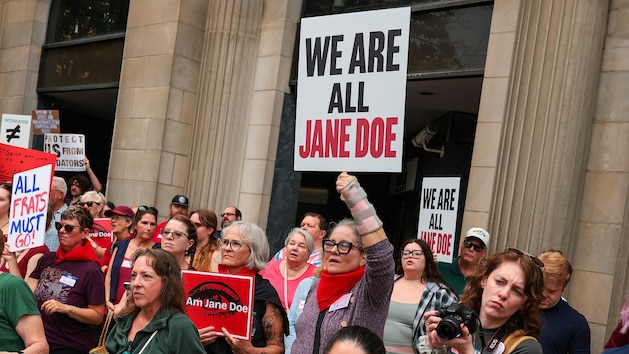
The meeting Wednesday comes a month after allegations of a “gang rape” at a campus fraternity shook the Ivy League school.
A then-undergraduate student identified only as Jane Doe made a complaint to campus police in November 2024, three weeks after the incident occurred, that she had been raped by a group of men at the Chi Phi fraternity house. Last month, she filed a civil suit against the men and the university alleging that she had been drugged and raped.
No criminal charges have been filed in the case, but an investigation by the New York attorney general is ongoing. All seven fraternity brothers named in the civil lawsuit have denied wrongdoing.
Faculty senators inside the room on Wednesday described a “heated debate” over the resolution, though the bulk of speakers appeared in favor of the resolution.
Ortiz argued that “many students do not come forward because they understand that their ordeals will not be treated seriously by Cornell,” and urged his fellow faculty senators to hold the school’s leadership responsible.
“This administration has chronically failed to address these core issues at the bottom of the Jane Doe case as well as hundreds of other untold stories of sexual assault and trauma at this university. This is the primary rationale for this resolution,” he said, according to the remarks.
The one-sentence resolution being debated reads: “The Faculty Senate has no confidence in the ability of the central administration to effectively address the ongoing crisis of sexual assault at Cornell University.”
The resolution itself does not call for specific action — such as demanding resignations or forcing policy changes — and instead offers a broad condemnation of the school’s response.
While Ortiz applauded recent changes announced by Cornell leadership to address sexual violence on campus, he argued that the changes were too little too late.
“For years, faculty who have expertise in the issues at hand ranging from student disciplinary procedures to mental health have begged this administration to let us help with these issues. Instead, we have been stonewalled by Cornell’s increasingly top-down leadership. That the administration waited until the day before they might be held accountable in the faculty senate meeting today is appalling,” he said.
Cornell President Michael Kotlikoff addressed the faculty senate toward the beginning of the meeting to defend the school’s recent measures addressing sexual assaults on campus.
Ahead of the meeting Wednesday Kotlikoff announced additional measures to “strengthen campus safety, better support survivors, and begin addressing the social context of sexual violence at Cornell.”
The school vowed to add more staff to its Office of Civil Rights — which conducts Title IX investigations — as well as report allegations of sexual assault to the New York State Police during the school’s review of its policies.
Cornell also suspended all social events and parties held by fraternities while the school conducts a “review of fraternity life at Cornell to determine whether and how it can safely continue.”
In a video released earlier this month, Kotlikoff said the university “must do better” calling it a “defining moment” for the university and pledging to take “every step necessary to make Cornell an institution that leads not just in what we say about these issues, but in the work we do to address them.”
Debate on the resolution is scheduled to continue during the faculty senate’s next meeting on Oct 28. Voting will take place during the five days following that meeting.
Cornell’s faculty senate is a “governing body that supports faculty communication toward successful management of objectives for the University,” according to the school. Academic titleholders at Cornell — including professors, senior lecturers, librarians, archivists and others — are eligible to be senators, who serve three-year terms.
Copyright © 2026, ABC Audio. All rights reserved.