


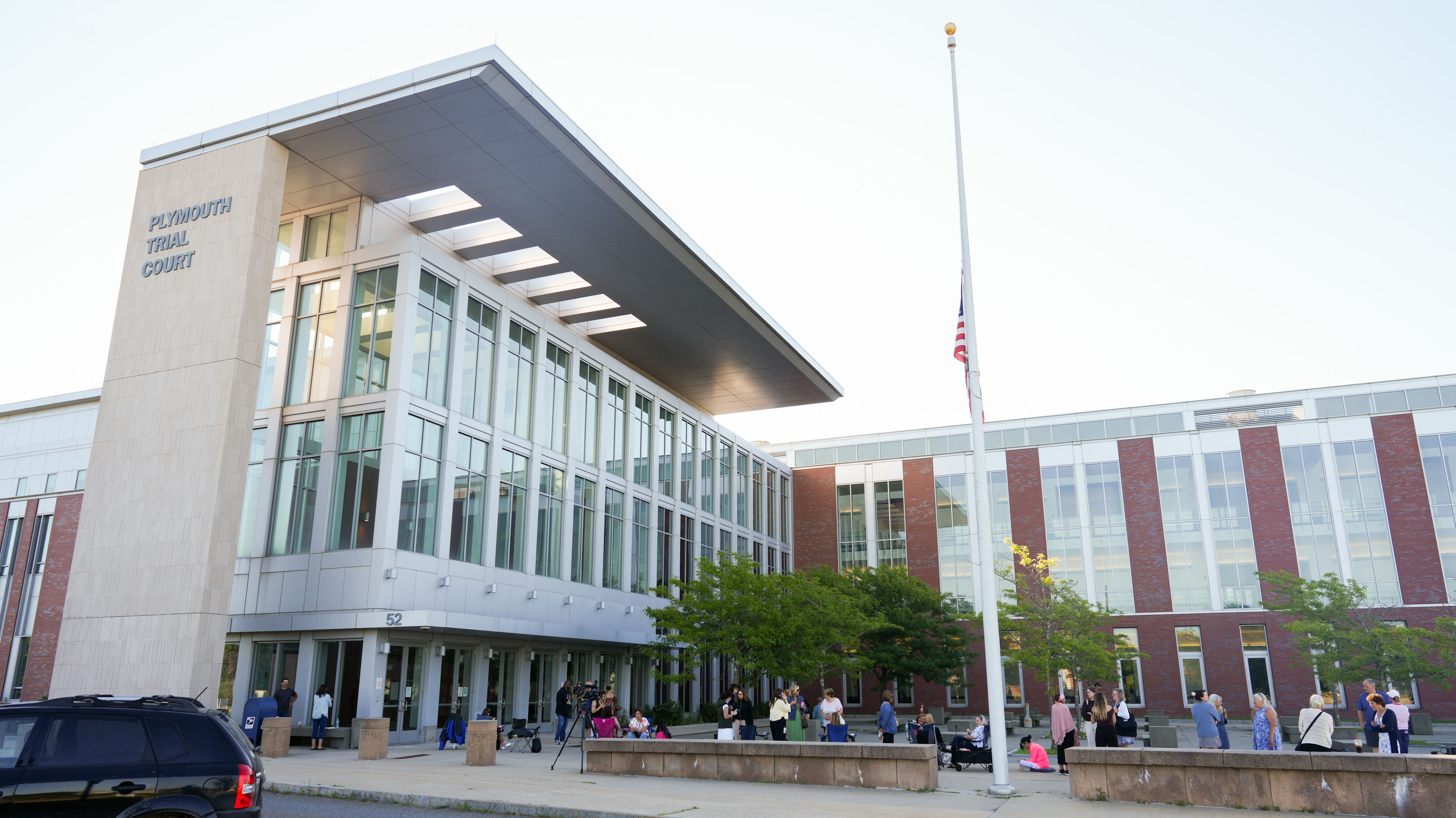
(NEW YORK) — After 30 hours of deliberations spanning five days, the jury in the murder trial of Lindsay Clancy has still not reached a verdict.
The extensive deliberations followed weeks of testimony concerning whether or not Clancy was suffering from postpartum psychosis when she strangled her children and attempted to take her own life in January 2023 and whether she should be held criminally liable for the killings.
On Wednesday afternoon, after the jury reported they were at an impasse for a second time in as many days, Judge William Sullivan read the jury a Tuey-Rodriguez instruction, encouraging them to continue working together toward a verdict.
The Tuey-Rodriguez instruction urges jurors to remember it is their “duty to decide this case if you can do so conscientiously,” reminding them “there is no reason to suppose that the case will ever be submitted to six persons who are more intelligent, more impartial, or more competent to decide it than you are, or that more or clearer evidence will be produced on one side or the other.”
Boston-based criminal defense attorney Peter Elikann said sending the jury back to deliberate again may force a hung jury if the deadlock continues.
“At that point, the judge has to declare a mistrial, unless he has the consent of the jury who would want to go out again, and that’s rather doubtful,” Elikann said in an interview with ABC News on Wednesday.
“This is really it. This is kind of the final push,” Elikann added.
If a mistrial is declared, one of several next steps may transpire, according to ABC News legal analyst Brian Buckmire.
“First and foremost, the defense is probably going to ask for bail, some amount of money or release, that she does not have to be incarcerated pending the prosecution decision as to whether or not they’re going to retry her,” Buckmire said in an interview Wednesday.
Buckmire said the prosecution could make the decision to retry her “right then and there” or in the near future following a mistrial declaration.
Elikann said the prosecution could also choose to drop the case, though he added, “That’s not all that likely.”
Buckmire said a second trial is a likely scenario, in his opinion.
The second option, according to the attorneys, could be plea negotiations.
“In many cases, the prosecution, after having a deadlocked jury, will kind of say to the defense, ‘Let’s compromise. We’ll break down the charges to something much lesser, and can we agree on that, that you’ll plead to something, a much more minor charge,'” Elikann said.
Buckmire said it is possible, however, that prosecutors would not want to lessen any of the charges moving forward.
Speaking to the deliberations and the jury’s inability thus far to reach a verdict in this case, Elikann said this sort of result was both rare and, in some ways, predictable.
“Most of the time, probably all the lawyers will tell you the conventional wisdom is that [an] insanity defense almost never works,” he said, adding it usually ends in a conviction.
Elikann explained that Clancy’s case was different.
“Everybody had a sense that they would never get 12 people to convict her of first-degree murder. And it was anticipated, by many people, that this would be either not guilty by reason of insanity or a hung jury,” he said.
Copyright © 2026, ABC Audio. All rights reserved.