


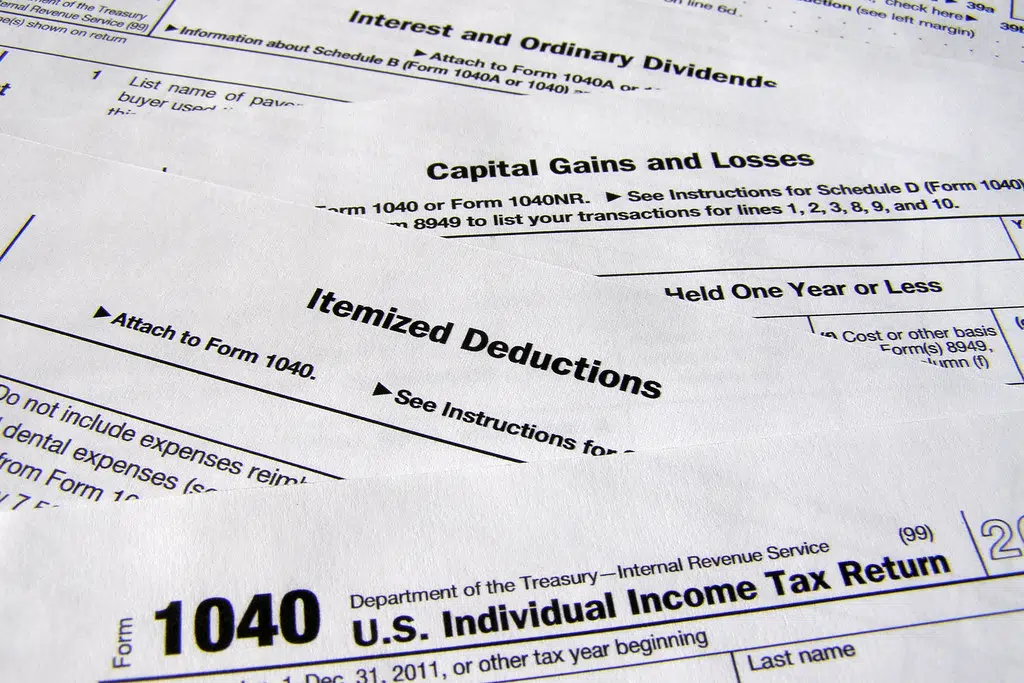
A Taxing Anniversary
As we noted previously, you could start filing your federal income tax returns last week, due April 15. And we have something that happened 113 years ago yesterday for it.
Ratified on February 3, 1913, the 16th Amendment to the U.S. Constitution gives Congress the ability to levy a federal income tax on individuals and corporations without apportioning it among the states or basing it on the census.
It reads, ” “The Congress shall have power to lay and collect taxes on incomes, from whatever source derived, without apportionment among the several States, and without regard to any census or enumeration”.
The amendment was created to allow Congress to generate revenue through income taxes without the limitations of previous, failed attempts (like in 1895) that required taxes to be proportional to state populations. The 1895 U.S. Supreme Court case of Pollock v. Farmers’ Loan & Trust Company set the legal foundation for the modern, permanent income tax system, overruling the prior Congressional attempt.
Immediately following ratification, not surprisingly, Congress passed the Revenue Act of 1913, which established the first permanent federal income tax. And all this shifted the balance of power away from states, and toward the federal government, creating the larger more centralized government funded by the so-called progressive income tax system where the more you make, the higher percentage of that income you pay in taxes—which is inherently unfair.
Prior to that time, the federal government relied on tariffs or excise taxes for its revenue. But they were spending more than they took in, so they came up with a new way to get money—directly from citizens.
So the Congressional overspending issue is not new, to the point that overtaxing Americans is not even enough to pay for things. Look out for what may be next; after all, at one point, there was no tax on your income, either.